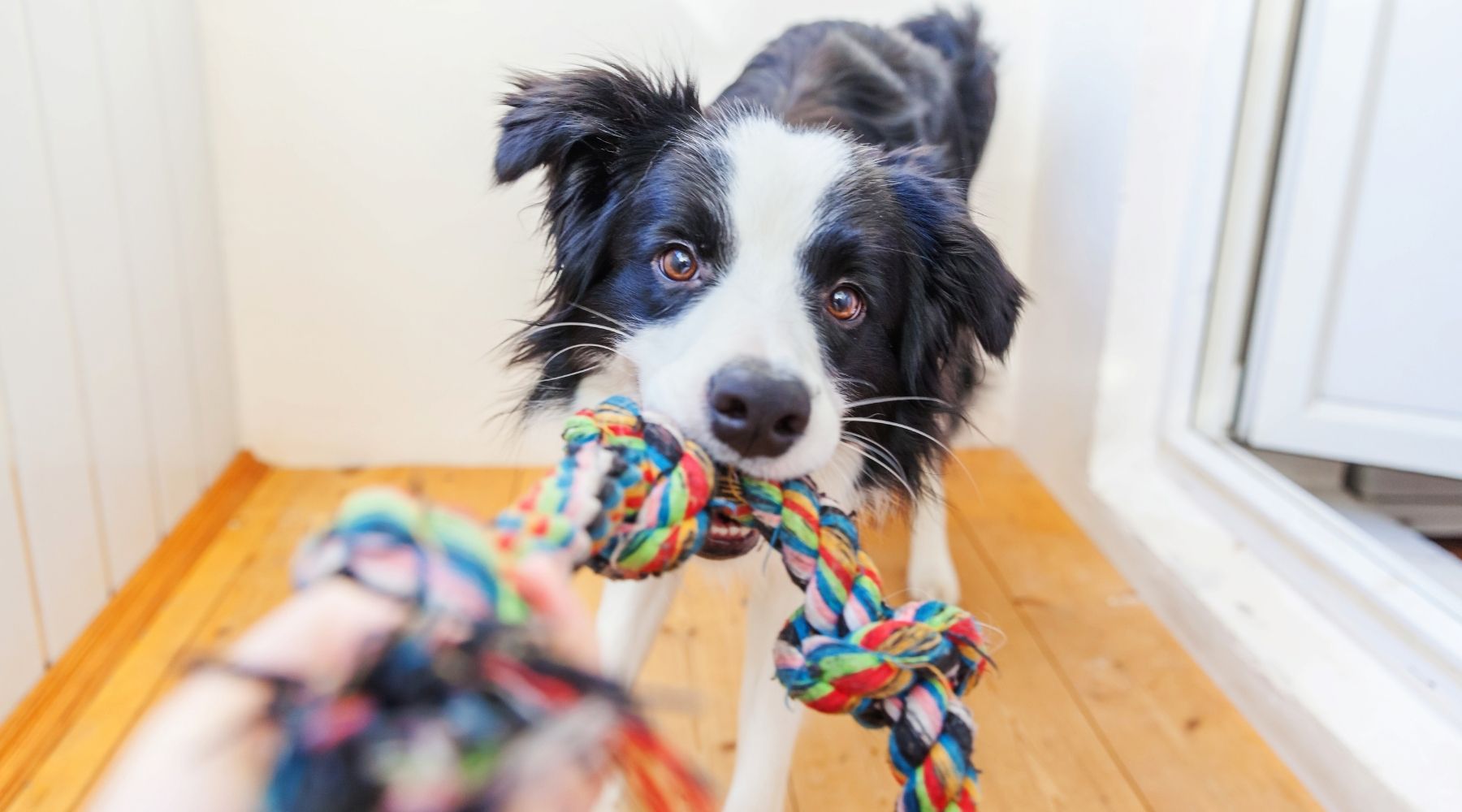



















Perhaps you know this situation: you are returning from a really nice, long walk. Your dog was active, ran along dirt paths, sniffed extensively, and perhaps even played with other dogs. Once home, only the stairs stand between him and his favorite spot. But suddenly, he takes the steps much slower than usual. He might even pause briefly or look at you before continuing.
Once in a while, such behavior doesn't necessarily mean anything unusual. After a longer or unfamiliar strenuous activity, dogs can also be tired and adjust their movements accordingly. However, if your dog repeatedly navigates stairs more slowly, hesitates, or significantly changes his movement patterns after walks, it is worth taking a closer look. Difficulty climbing stairs can be one of the changes that become noticeable with musculoskeletal issues.
Stairs, in particular, demand something different from the body compared to normal walking on a flat surface. Joints, muscles, coordination, and strength must all work together. After a long trip, this additional task can therefore show particularly clearly when your dog is tired or if certain movements are becoming uncomfortable.
In this article, we will explain why climbing stairs might suddenly become more difficult for your dog after long walks, what role joints and muscles play in this, and how you can distinguish normal exhaustion from changes that should be investigated further. We will also show you how to meaningfully coordinate exertion and recovery and support your dog's regeneration in everyday life.
Why stairs can suddenly become harder after a long walk
A long walk is work for your dog's body. And it’s not just the distance covered that counts. The ground surface, pace, inclines, weather, playing, running, and many small changes in direction all determine how demanding an outing actually is. Ten kilometers of relaxed walking on a flat path can put different demands on the musculoskeletal system than a significantly shorter route with many inclines, uneven ground, and boisterous romping.
After such exertion, the muscles can be tired. This is initially a normal physical reaction. Muscles must continuously stabilize, cushion, and generate movement during a long trip. If you add stairs afterward, specific force is required once again.
That is why the comparison with your dog's normal behavior is especially interesting. If he merely walks up a bit more quietly after particularly long trips and moves completely normally again after a rest period, fatigue is a likely explanation. If, on the other hand, he begins to regularly hesitate before the stairs, takes much longer, shows a changed posture, or increasingly wants to avoid the steps, this behavior should not simply be dismissed as exhaustion. An aversion to stairs, difficulty standing up, or a slowing down during walks can be signs of pain or limitations in the musculoskeletal system in dogs.
Overexertion of muscles and other soft tissue structures is also possible. Such complaints can occur, among other reasons, after more strenuous or unusual activity.
Therefore, your observation over several situations is particularly valuable. How does your dog walk at the beginning of the walk? How does he move immediately afterward? Is everything back to normal the next morning? Or are you noticing the same change more frequently now? It is not a single slow ascent that is decisive, but a recurring change compared to the movement pattern that you are familiar with from your dog.
What happens in joints and muscles when climbing stairs
Climbing stairs looks like an everyday movement to us. For your dog's musculoskeletal system, however, it is more demanding than normal walking on a flat surface. Studies on healthy dogs show that the joints of the hind limbs move through a greater range of motion when climbing stairs. The knee and hock (tarsal) joints, in particular, are flexed more, while the hip and hock joints are extended more while pushing the body up.
At the same time, the muscles must develop enough strength to move the body weight from one step to the next. The muscles of the hindquarters are particularly challenged. Gluteal and thigh muscles help to push the body upward. For this very reason, controlled stair climbing is sometimes even used in animal physiotherapy rehabilitation. There, however, it is specifically dosed and adapted to the respective dog.
After a long hike or an unusually active round, this additional task meets a musculoskeletal system that has already been working. Muscular fatigue is a normal consequence of longer or intense physical exertion and means that the muscles cannot temporarily provide the same performance. Your dog may then take the stairs more slowly because he is pacing his remaining strength differently.
It is therefore also interesting to see how your dog goes up the stairs. Does he continue to take every step evenly, just a bit slower? Or does he drag a hind leg, hop with both hind legs at the same time, skip certain steps, or shift his weight noticeably? Such differences are much more telling than speed alone.
Stairs can thus act almost like a small window into your dog's movement sequence. During a normal step on a flat path, an emerging limitation might not even be noticeable. If the dog then has to move his body upward step by step, changes can become more visible.
Exhausted or limited? Changes you should look out for
The crucial question is therefore not: "Is my dog tired after a long walk?" Of course he is allowed to be. Much more important is the question of whether his reaction matches the previous exertion and whether he recovers completely afterward.
If you have gone on an exceptionally long hike for once and your dog takes the stairs a bit more leisurely afterward, rests, and then moves normally again later, this initially points more towards understandable fatigue. The situation is different if even ordinary walks increasingly lead to him hesitating before the stairs or visibly navigating the steps differently.
Therefore, also observe the hours after the exertion and the next morning. Does your dog get up normally? Does he walk loosely again after a few steps? Does he want to go for a walk as usual? Or does he seem stiff, favor a leg, avoid jumping, or suddenly need significantly more time when getting up?
The development over several weeks is also important. A creeping drop in performance is often barely noticeable in everyday life. Perhaps walks are being shortened subconsciously because your dog has become slower. Perhaps he is now waiting before stairs, even though he used to just run up them. Difficulties with stairs, getting up, jumping, or moving are therefore also points that veterinarians specifically ask about when assessing possible lameness and pain.
You should become particularly attentive if clear lameness, pain reactions, swelling, or a suddenly strong restriction of movement occur. Recurring problems after exertion should also be clarified by a veterinarian. A change in stair climbing is not a diagnosis. However, it can be a valuable indication that joints, muscles, or other structures of the musculoskeletal system should be looked at more closely.
Therefore, do not try to force your dog to his usual pace. If he takes the stairs more slowly after a trip, he is allowed to go slowly. This voluntary adjustment of his pace provides you with important information about how he has physically processed the previous exertion.
How you can better coordinate exertion and regeneration
Movement is important for dogs. Nevertheless, it is not automatically true that the longer the walk, the better. It is crucial that the exertion matches your dog's age, fitness level, physique, and health status. A dog that is out for an hour every day can react very differently to a spontaneous three-hour hike than a well-trained dog that runs such distances regularly.
This is where a common mistake in everyday life lies. During a trip, we orient ourselves by whether the dog is still keeping up and showing joy. However, many dogs are motivated to be active by exciting smells, other dogs, or their own enthusiasm, even though their muscles are already tired. The fact that an exertion was too high is therefore sometimes only noticed later.
Muscular fatigue is basically a normal reaction to longer or intense physical activity. Training improves physical performance, but it should be adapted to the individual training state and increased step by step.
For your everyday life, this means: observe not only how fit your dog seems during a trip, but also how he moves afterward and the next day. If he needs significantly longer to recover after exceptionally long walks, you should reduce the distance or intensity next time. After heavier exertion, a quieter day following it can make sense instead of planning the next big tour immediately.
A slow start can also help. Instead of getting out of the car and immediately running off, let your dog walk calmly for a few minutes first. Similarly, a longer activity should not end with a wild sprint in the last few meters. A gradual adjustment to physical exertion and sufficient recovery time are also basic principles in veterinary rehabilitation.
If your dog already seems tired after a trip and would have to navigate several floors at home, you should also not consider the stairs as an additional training session. Let him go at his own pace and avoid unnecessary going up and down.
Regeneration is not a sign that a dog is not getting enough exercise. It is a necessary component of physical activity. Exertion and recovery belong together if muscles and the musculoskeletal system are to remain capable in the long term.
How you can support muscles and the musculoskeletal system in everyday life
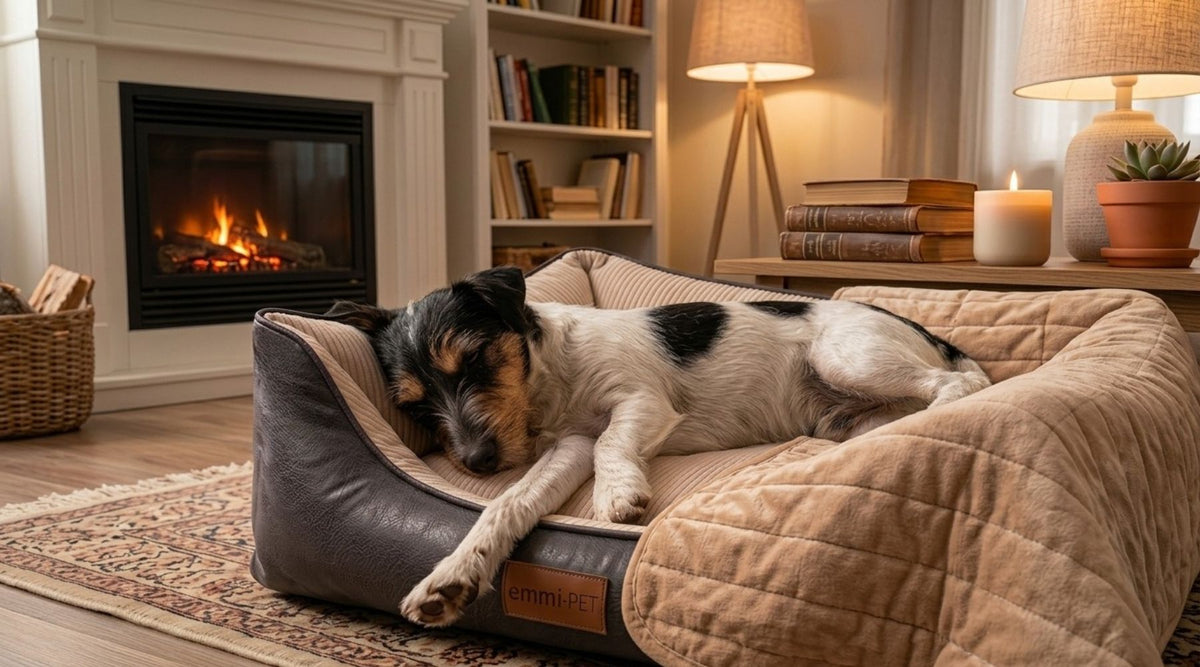
In addition to appropriate load management, you can also improve the conditions for your dog's recovery. After longer trips, sufficient rest should be possible first. A comfortable place to lie down, water, and a quiet environment give your dog the opportunity to wind down and recover.
Regular, consistent movement is also more valuable than a constant change between very little activity and extremely demanding tours. The body can adapt to loads if these are built up in a controlled manner. In the rehabilitation of dogs, movement is therefore also increased step by step and adapted to the ability of the individual animal. Too fast increases, on the other hand, can lead to renewed complaints.
Additionally, physical applications can be part of such a routine. Our emmi-PET Physio-Set can also be sensibly integrated here. It can be used for the supportive care of muscles and the musculoskeletal system and, for example, integrated into the regeneration routine after physical activity. The correct classification is crucial here: our emmi-PET Physio-Set PLUS, however, is not a way to ignore complaints so that the dog can be exerted further.
Supportive care does not replace necessary recovery, nor does it replace a veterinary diagnosis or individually adapted physiotherapy. If your dog shows pain, lameness, or recurring movement restrictions, it should therefore first be clarified what is behind it. Physical procedures are also used as a supplement in veterinary rehabilitation, while controlled movement and individually developed exercises remain central components.
It is particularly helpful to develop a feel for your dog's personal limit of endurance. Perhaps ten kilometers are easily possible for him, while a shorter distance with many inclines is significantly more strenuous. Perhaps he tolerates long trips well but needs a quieter day afterward. With such observations, you can increasingly tailor activities to his needs.
If your dog runs up the stairs a little slower after a long walk, he may simply be tired at first. The crucial factor is how often the change occurs, how clearly it is expressed, and how well your dog recovers afterward. Recurring hesitation, a changed movement sequence, lameness, or pain, on the other hand, should be checked by a veterinarian. With appropriate exercise, sufficient regeneration, and a supportive care routine, you can do a lot to ensure that trips together remain what they should be: movement, activity, and above all, time together that your dog enjoys.