
















Maybe you only noticed it in passing at first. Your dog suddenly rubs his snout on the carpet, rubs his mouth on the edge of the couch, or briefly presses his face against the floor. Some dogs do this only occasionally, while others suddenly seem noticeably restless or repeat the movement more and more frequently.
Many dog owners initially consider this behavior to be a small peculiarity or a funny habit. In fact, however, there may be more behind rubbing the mouth than just a strange tic. Especially problems in the oral cavity often show up in dogs first through behavior and not through clearly visible pain.
In this article, we explain why dogs rub their mouths on the floor or furniture, what role gums, teeth, and irritation in the mouth can play, and how you can recognize when you should take a closer look.
Many dogs try to get rid of uncomfortable feelings in their mouths themselves
When dogs rub their mouths on the floor or furniture, it is often an attempt to relieve an unpleasant feeling in the oral cavity. This can be a slight itch, a feeling of pressure, or an irritated spot that is bothering the dog.
Gum irritation, in particular, is often underestimated. Even small inflammations or sensitive areas can cause dogs to start rubbing their mouths more often. Many dogs instinctively try to eliminate the unpleasant stimulus themselves somehow.
It is particularly insidious that such complaints often begin insidiously. The dog continues to eat normally, plays as usual, and initially appears inconspicuous in everyday life. This is precisely why the behavior is often not associated with possible dental problems for a long time.
Some dogs only briefly rub their snout along the carpet after eating. Others more frequently rub the side of their mouth against furniture or additionally begin to intensely lick their chops.
If this behavior suddenly occurs more frequently or changes, it is worth taking a closer look. Because many dogs first show oral complaints precisely through such small behavioral changes.
Inflamed gums can be surprisingly uncomfortable for dogs
Many people immediately think of severe pain or visible changes in the teeth when they think of dental problems. In fact, however, the burden for many dogs begins much earlier and often much more inconspicuously. Irritated or inflamed gums, in particular, can cause the mouth to feel permanently uncomfortable.
For dogs, there is often no clear pain point, but rather a constant disturbance or itching in the oral cavity. Many dogs try to influence precisely this feeling by rubbing on the floor or furniture. Some briefly press their snout against the carpet, others drag their mouth sideways along sofa edges or rub their face conspicuously intensely after eating.
Precisely because dogs cannot classify complaints like we humans can, they often react directly through behavior. They instinctively try to get rid of the unpleasant stimulus. This sometimes looks like a small habit from the outside, but it can already be an indication that the gums have become sensitive.
Such irritations often do not arise suddenly. Plaque on the teeth, food residues, and bacteria usually develop slowly over a longer period. This also causes the behavior to change gradually. Many dog owners only realize in retrospect that their dog has been rubbing its mouth more often for longer than before.
In addition, some dogs show other small changes in everyday life. They seem more cautious when chewing, take treats differently, or react more sensitively when their snout is touched. Bad breath or increased salivation can also occur together with rubbing the mouth.
Precisely this combination of small abnormalities is often important. Because many dogs do not show dental problems clearly, but through several seemingly harmless behavioral changes simultaneously.
It's not always just itching behind the behavior
Even if irritated gums are a common cause, the behavior should never be prematurely classified as harmless. Different problems can be behind rubbing the mouth.
Sometimes there are small injuries in the mouth, such as irritated areas on the lip or pressure points between the tooth and gum. Broken teeth or loose teeth can also lead to dogs trying to relieve the uncomfortable feeling by rubbing.
In addition, some dogs react very sensitively to small changes in the mouth. Even a tiny foreign body or an inflamed area can be a permanent nuisance. Many dogs then repeatedly deal with their snout, although externally hardly anything is visible at first.
Precisely for this reason, it is worthwhile to observe the behavior carefully. If your dog suddenly rubs his mouth significantly more often, seems more restless, or additionally changes his eating behavior, a closer look should be taken.
Many dogs unconsciously change their behavior around the mouth
Often, rubbing the mouth is not the only change. Many dogs additionally begin to lick their snout more often or to paw at their face. Some seem more concentrated when eating or repeatedly interrupt chewing briefly.
Especially sensitive dogs often react emotionally to oral complaints. They withdraw more quickly, seem calmer than usual, or react more sensitively when their head is touched. Because these changes often begin insidiously, they are easily overlooked in everyday life.
Yet precisely this behavior often shows very early that something is wrong. Dogs usually try to cope with complaints for a long time before they show clearly visible pain.
Therefore, small observations in everyday life are often particularly valuable. Not every rub on the carpet immediately means a serious dental problem. However, if the behavior suddenly occurs more frequently or arises together with other changes, it deserves attention and should even be clarified by a veterinarian.
A calm dental care routine can help relieve the mouth long-term
Especially with sensitive gums, daily oral hygiene plays an important role. Bacterial plaque can additionally irritate the gums and ensure that unpleasant feelings in the mouth continue to increase.
It is particularly important to build up dental care calmly and without stress. Many dogs react sensitively to hectic movements or pressure in the oral cavity. The more relaxed the routine is experienced, the easier dogs accept care in everyday life.
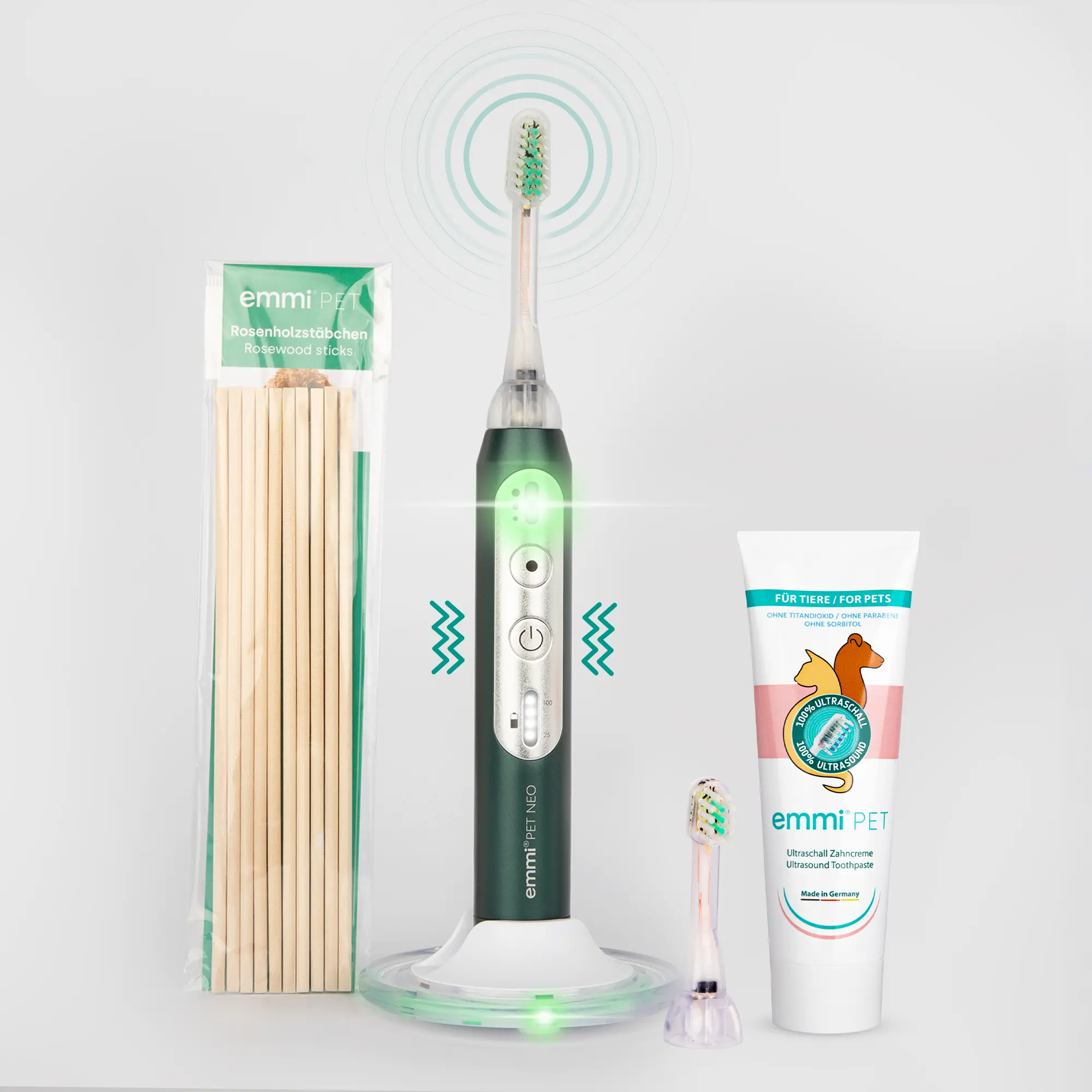
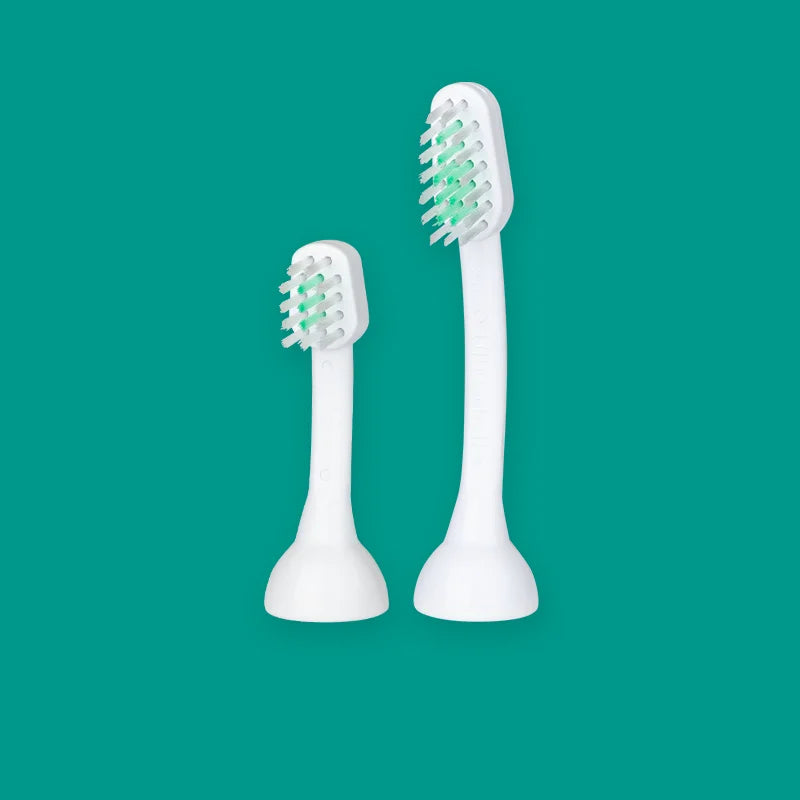
Many dog owners therefore deliberately integrate our emmi-pet ultrasonic toothbrush slowly and in small steps into their dog's daily life. Especially sensitive dogs often benefit from the fact that the application takes place without strong mechanical movements. This can make dental care seem more pleasant for many dogs and allow it to be integrated more easily into calm routines.
Nevertheless, it remains important: dental care supports daily oral hygiene, but does not replace a veterinary examination. If your dog shows severe complaints, eats less, or the rubbing clearly increases, the cause should always be professionally clarified.
Small behavioral changes often tell more than you initially think
In everyday life, many things initially seem harmless. Your dog briefly rubs his snout on the carpet and a few minutes later everything seems normal again. Precisely for this reason, such changes are often underestimated.
However, behavior in dogs often shows very early when something has become unpleasant. Many dogs try to regulate complaints themselves for a long time before they show clear pain. Especially problems in the oral cavity therefore often first stand out through small habits.
The earlier such changes are noticed, the better it is often possible to react. Not every rubbing of the mouth automatically means a serious dental disease. Nevertheless, it is worthwhile to look closely and take small changes seriously.
Because in the end, it's not just about teeth or gums. It's about your dog being able to eat relaxed, feeling comfortable, and experiencing his everyday life without permanently disturbing complaints.