















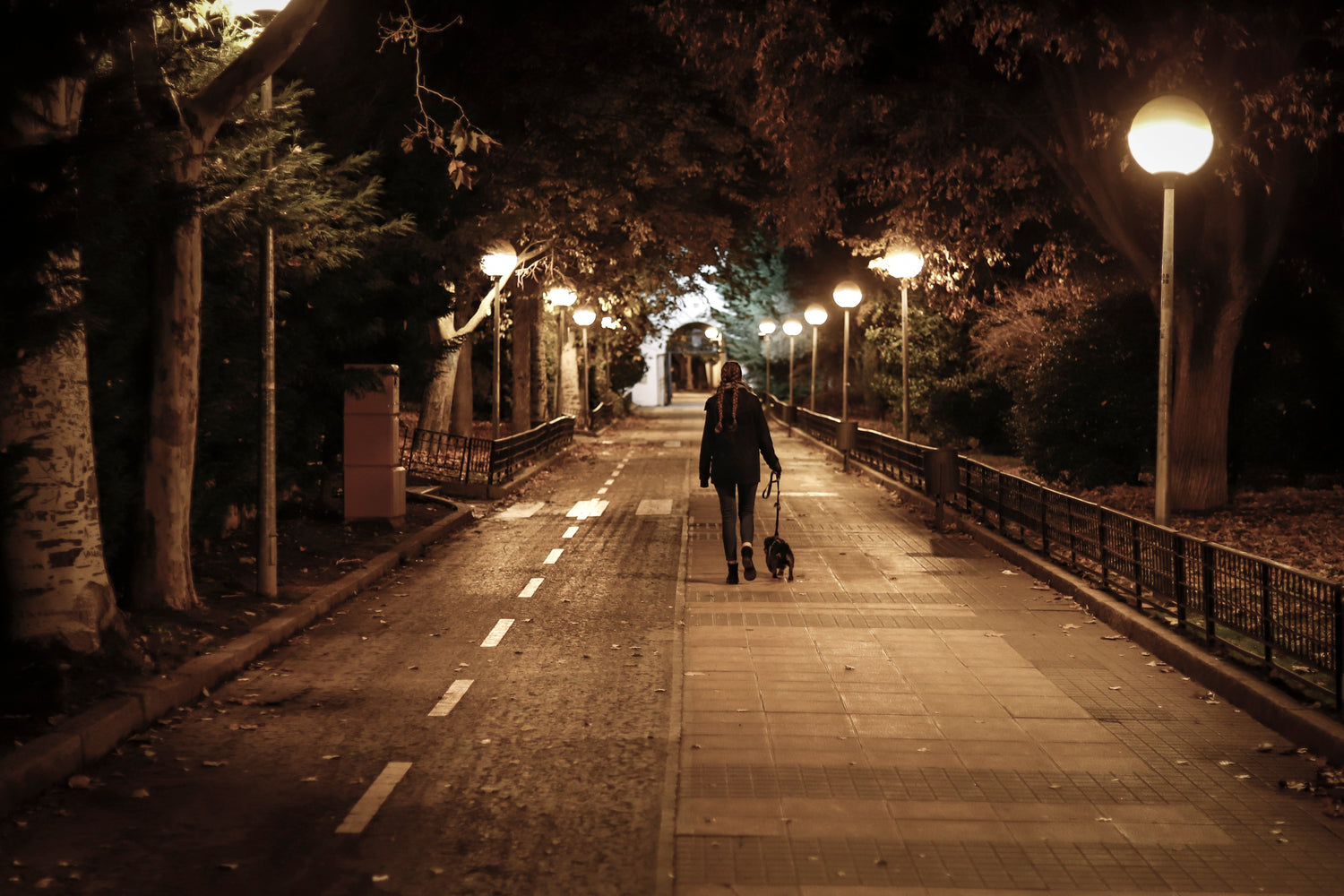
Winter fundamentally changes our walks. Paths that seem familiar during the day suddenly appear strange in the dark. Shadows move, sounds are harder to identify, and the environment seems more unsettled overall. What is merely unusual for us humans can quickly become a real challenge for dogs.
Many winter walks take place early in the morning or late in the evening, precisely when visibility and orientation are limited. Dogs must rely more heavily on their senses, are more alert, and react more sensitively to their surroundings. This constant attention is energy-intensive and leads to inner tension in many dogs, which isn't always immediately apparent.
In this article, we explain why dark winter walks can trigger stress , how this tension often manifests in the jaw, and what this specifically means for your dog's dental health . We also show you how you can provide targeted support with small adjustments and gentle care.
Darkness changes your dog's perception.
Dogs perceive their environment differently than we humans do. They rely less on clear vision and more on smells, sounds, and movements . In the dark, these stimuli shift significantly. Sounds seem louder, footsteps echo more, and even familiar smells change due to cold and dampness.
Movements in the corner of the eye can be irritating, shadows suddenly appear threatening, and distant sounds are harder to identify. Your dog's brain is working overtime to process and categorize all this information. Particularly sensitive, insecure, or less confident dogs are more prone to internal stress as a result.
This tension isn't always immediately visible. Many dogs appear outwardly calm, but are inwardly on constant alert. Their bodies remain tense without any real relief. It's precisely this underlying tension that makes dark winter walks so challenging for many dogs.
The more frequently such situations occur, the more deeply this pattern becomes ingrained. The dog learns that darkness means attention and caution. If this state is not consciously addressed, the tension can become ingrained in everyday life, often in places where it is not initially expected.
Stress finds a way out – often through the jaw.
Tension rarely stays solely in the mind. When a dog is alert, insecure, or internally agitated for an extended period, this stress will find physical expression. In many dogs, this strain is particularly evident in the jaw area.
Some dogs unconsciously clench their teeth, others chew without thinking or grind their teeth slightly. Often this happens very quietly and is hardly noticeable in everyday life. But these subtle signals should be taken seriously. They indicate that the dog is under internal pressure and is not finding sufficient release.
The jaw is closely connected to nerve pathways, muscles, and the entire head area. Prolonged tension has a particularly strong effect here. Teeth, gums, and jaw joints are subjected to mechanical stress , even if no external dental problems are visible. If this tension persists for weeks, it can have a lasting impact on dental health.
This pattern occurs more frequently, especially in winter when dark walks are common and stressors are more frequent. Many dogs come home and initially appear calm, but are still internally tense. The consequences only become apparent later, for example, in the form of sensitive gums, increased plaque, or bad breath.
Uncertainty increases the risk of accidents and the associated stress.
Dark winter walks not only bring mental tension but also very real risks. Limited visibility, slippery paths, and unexpected stimuli increase the likelihood of frightening moments. A sudden noise, an oncoming cyclist without lights, or a moving shadow – all of these can startle a dog.
Dogs are very perceptive of this uncertainty. Many react with heightened vigilance, pulling harder on the leash or stopping abruptly. Their bodies remain in a constant state of readiness , ready to react at any moment. This persistent state of alert is exhausting and drains their energy.
This effect is amplified if the owner experiences slips, hectic situations, or insecurities. Dogs are highly attuned to their human's body language. If tension is also noticeable in the owner, it is immediately transferred. The walk may end eventually, but the stress often doesn't subside immediately.
Many dogs carry this inner tension home with them. Only in familiar surroundings does it become apparent how much the walk has demanded of them. This is precisely where the transition from outward insecurity to internal, physical strain begins.
Why jaw tension affects dental health
A chronically tense jaw directly impacts dental health. Prolonged pressure puts increased mechanical stress on the teeth , makes the gums more sensitive, and puts the temporomandibular joint under strain. This strain often goes unnoticed but can have long-term consequences.
Stress also affects the entire body. Saliva flow can be reduced, weakening the natural protective barrier in the mouth. Saliva plays a crucial role in the self-cleaning of teeth. Without this protection, plaque adheres longer , and bacteria can multiply more easily.
This creates an unfavorable interplay between inner tension and physical reaction. Jaw tension, stress, and an increased susceptibility to plaque, tartar, or gum irritation all interact. Especially in winter, when these stresses occur regularly, it's worthwhile to consciously counteract them.
Starting early can not only protect dental health, but also help the dog to calm down more quickly after stressful situations.
Relaxation begins after the walk
Not all stress can be avoided outdoors. Darkness, unfamiliar stimuli, and external influences are simply part of winter. That makes what happens after the walk all the more important. The transition from outdoors to indoors often determines how quickly your dog calms down again.
A calm journey home, a conscious arrival at home, and a familiar environment help the nervous system to calm down. Subdued lighting, quiet sounds, and established routines signal security. Now, vigilance is no longer necessary.
Many dogs need a moment to release tension after walks in the dark. Some lie down immediately, others seek closeness, or still seem restless. Giving them space to do this allows their bodies to begin reducing stress – both physical and emotional.
Especially sensitive dogs benefit when this transition is consciously managed. Relaxation isn't a switch that can be flipped instantly, but a process that requires support.
Gentle dental care as part of relaxation
For dogs prone to jaw tension or teeth grinding, dental care plays a particularly important role. It should never create additional pressure or stress , but ideally contribute to relaxation. This is precisely where the advantage of calm, gentle care becomes apparent.
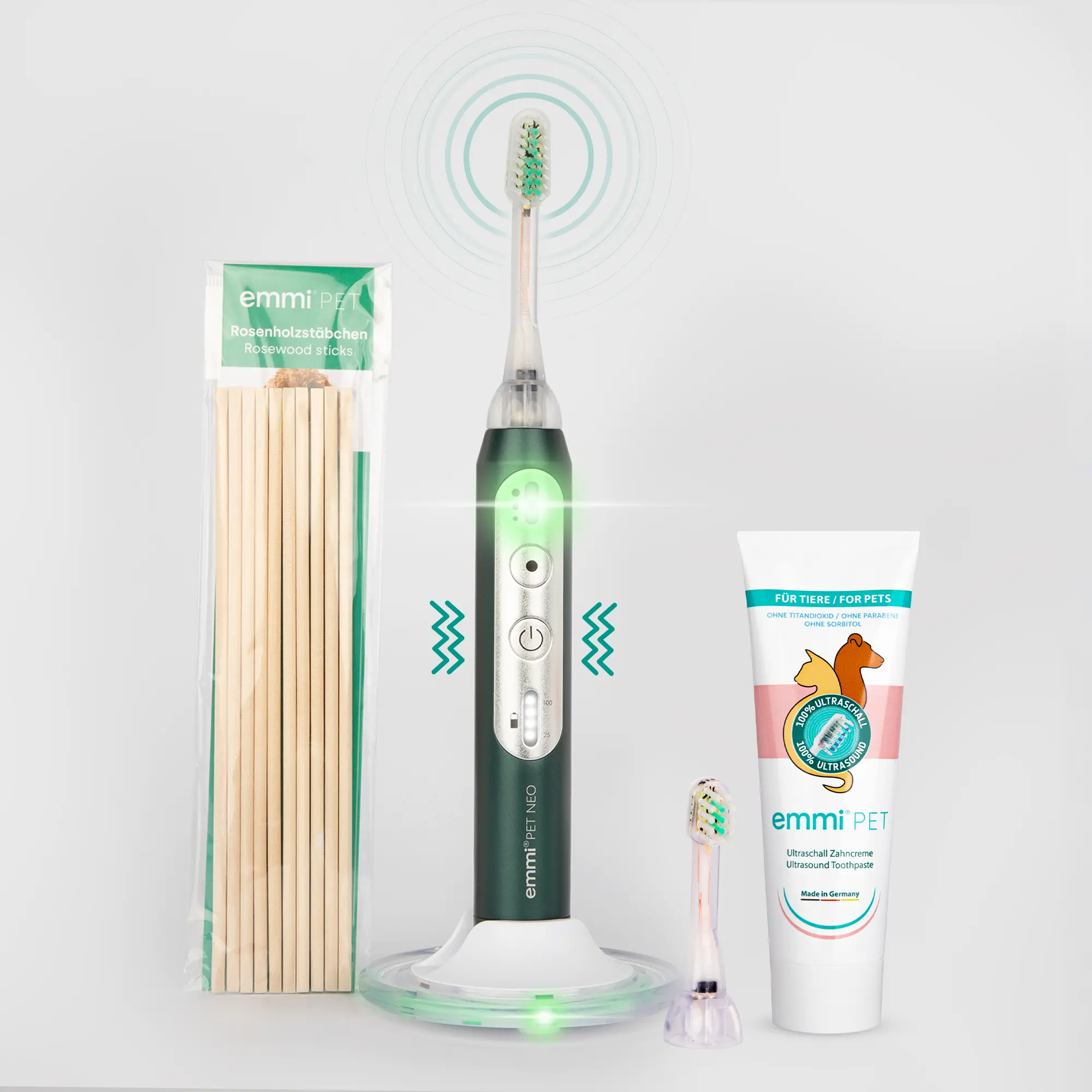
Our emmi-pet ultrasonic toothbrush works without mechanical movement, vibration, or noise. This prevents additional irritation in the sensitive oral cavity. The ultrasound is quiet and consistent , even in areas like the gum line or between teeth.
Many dogs find this type of dental care pleasant . It's not perceived as an intervention, but rather as a calming moment that conveys closeness and security. Especially after a stressful walk, this type of care can help relax the jaw and signal the body to let go.
When dental care is regularly integrated into such relaxation phases, a positive effect occurs on several levels. Teeth and gums are supported, while stress is reduced at the same time.
Care as a sign of security and closeness
Grooming is so much more than just hygiene. It's a moment of connection , a time when your dog feels safe and doesn't have to perform. Especially after a tiring walk in the dark, this moment can be crucial for calming down.
Gentle touches, a calm voice, and recurring rituals have a stabilizing effect on the nervous system. The body is allowed to let go, breathing becomes calmer, and the muscles relax. For many dogs, grooming is precisely the transition they need to move from tension to relaxation.
Over time, an important learning pattern develops. The dog no longer associates stressful situations solely with stress, but also with the knowledge that something pleasant will follow. Tension is followed by relaxation. This trust has a positive effect on overall well-being and strengthens the bond in the long term, not only with regard to dental health.